
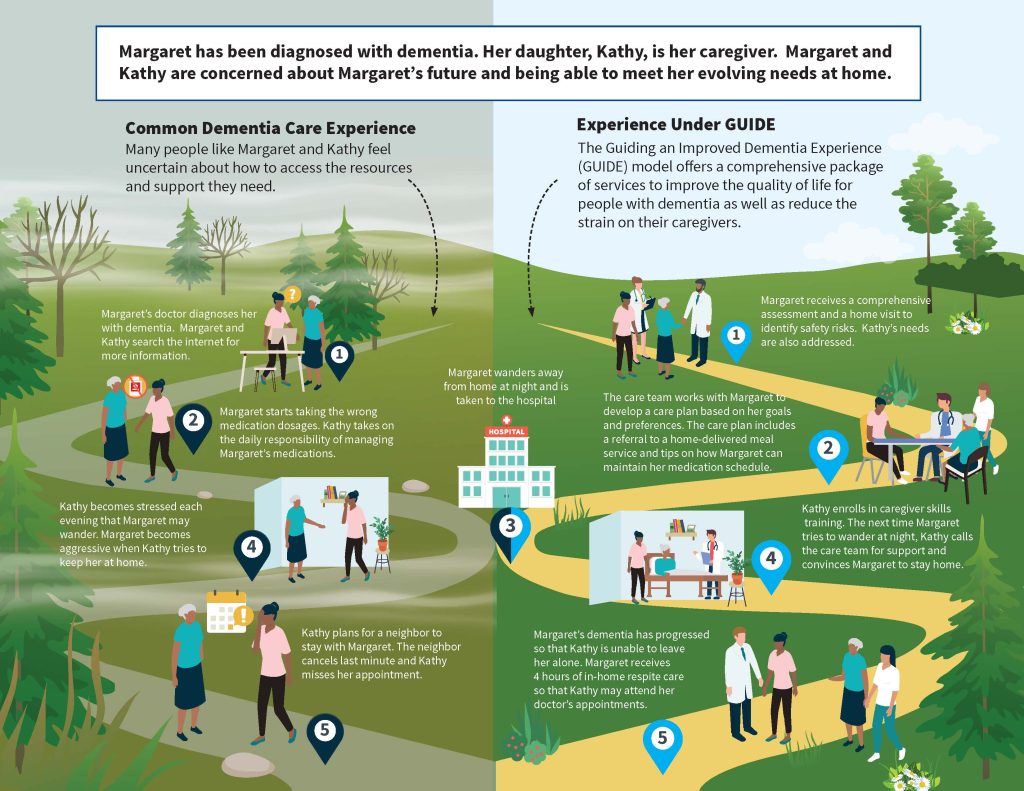
The GUIDE (Guiding an Improved Dementia Experience) Model provides coordinated, person-centered care and support for people living with dementia and their caregivers. Through comprehensive care management, caregiver education, respite services, and connections to community resources, the program helps individuals remain safely in their homes and communities longer.
Services and Support
The GUIDE Model offers evidence-based services designed to address the needs of both people living with dementia and their caregivers, including:
- Comprehensive Assessments and Care Plans: Personalized assessments and care plans tailored to individual needs and preferences.
- Care Coordination: Access to an interdisciplinary care team, including 24/7 access to a team member for support.
- Care Navigation: Assistance connecting with clinical and non-clinical services, including meals, transportation, and other community-based resources.
- Caregiver Training and Education: Resources and education to help caregivers build skills, understand dementia, and navigate caregiving challenges.
- Respite Services: Up to $2,500 annually in respite care to give caregivers temporary relief from their caregiving responsibilities. Options may include in-home care, adult day services, and out-of-home respite.
Supporting Caregivers
Caregivers play a vital role in supporting people living with dementia, and they need support, too. The GUIDE Model includes a caregiver assessment that evaluates knowledge, needs, social support, well-being, stress levels, and other caregiving challenges.
Through education, care coordination, community resources, and respite services, the program helps caregivers maintain their own well-being while continuing to care for their loved ones. Respite services are also being evaluated under the model to better understand their role in helping caregivers sustain care at home and potentially delay the need for facility-based care.
Goals of the GUIDE Model
The GUIDE Model aims to:
- Help people living with dementia remain safely at home and in their communities longer, potentially delaying long-term nursing home placement.
- Reduce hospitalizations, emergency department visits, post-acute care needs, and other costly interventions.
- Improve access to evidence-based caregiver education, training, support services, and respite care.
- Enhance quality of life for people living with dementia and their caregivers through comprehensive, coordinated support.
- Strengthen collaboration between interdisciplinary care teams and community-based organizations.
- Support better health outcomes while helping reduce Medicare and Medicaid expenditures.
Who Is Eligible?
To participate in the GUIDE Model, individuals must meet the following criteria:
- Have mild, moderate, or severe dementia.
- Be enrolled in both Medicare Part A and Medicare Part B.
- Have Medicare as their primary payer.
- Not be enrolled in Medicare Advantage or another Medicare health plan, including Special Needs Plans (SNPs) or the Program of All-Inclusive Care for the Elderly (PACE).
- Not be enrolled in the Medicare hospice benefit.
- Not be a resident of a long-term nursing home.
Additional eligibility requirements may apply.
Is the GUIDE Model Right for You or Your Loved One?
You don’t have to navigate dementia care alone. Learn how the GUIDE Model can connect you and your family with coordinated care, caregiver resources, and support.
For more information, call AgeGuide at (800) 528-2000 or submit a referral form.